
 EN
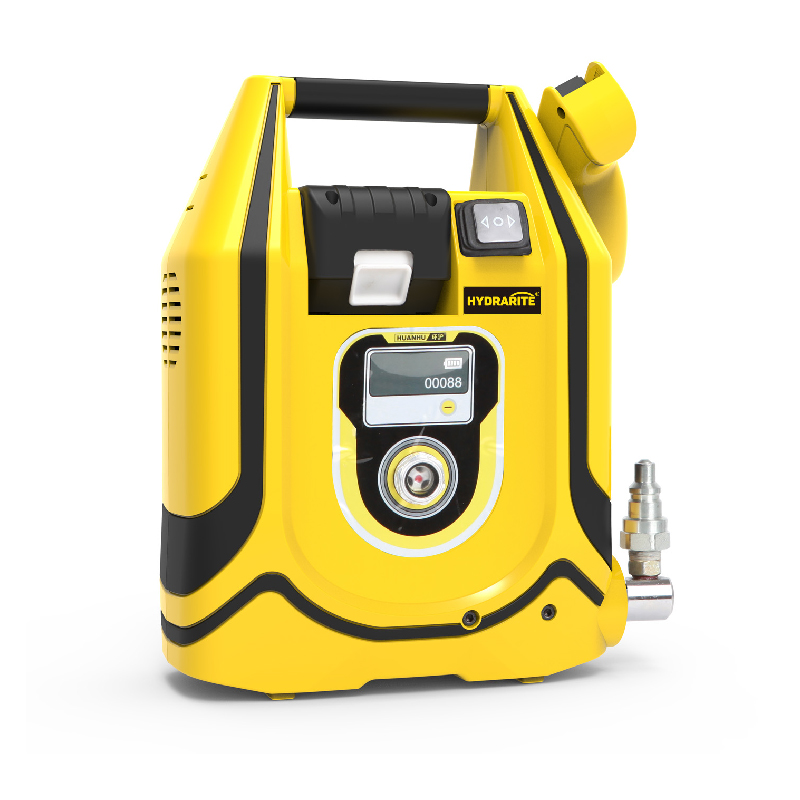
The Pump Choice Shows Up Long Before the Torque Number Does
A bolting crew does not usually argue about pumps. The argument happens later, when the wrench stalls halfway through a flange sequence, or when the torque scatter across a set of studs is wider than the joint procedure allows, or when the air compressor that was supposed to be “right there” turns out to be a hundred feet of hose away from where the work actually is.
An electric hydraulic pump tends to earn its place on a job not because it looks better on a datasheet, but because it removes three recurring headaches: inconsistent pressure delivery, dependence on a compressed air infrastructure that is rarely as clean as the spec sheet assumes, and the physical tax of manual pumping across a bolt count that runs into the dozens or hundreds. The advantages are real, but they are specific. They show up in repeatability, in energy conversion, in noise and siting, and in how the pump behaves when the job goes long.
Pressure That Holds Still Is a Different Class of Output
The core job of any hydraulic pump in a torque or tensioning system is to turn input power into controlled fluid pressure. Electric drive does that conversion with a stable, predictable input speed, and that stability carries through to the output.
A pneumatic pump depends on compressed air arriving at the tool at the specified pressure and flow. In a shop with a well-maintained air system, that condition can be met. In the field, it often is not. Air line length, fittings, filtration, and compressor cycling all introduce variation. A pneumatic torque system that sees supply pressure drop mid-cycle delivers a pressure curve that is less consistent, and that inconsistency shows up in torque scatter across a bolt pattern.
The precision gap is documented in equipment comparisons. Hydraulic torque systems hold accuracy in the range of plus or minus 3 to 5 percent, while pneumatic systems typically land in the plus or minus 10 to 15 percent band. For a pressure-boundary flange where the joint integrity depends on uniform clamp load, that is not a marginal difference. ASME PCC-1, the leading guideline for bolted flange joint assembly, treats bolt tensioning as a method capable of reducing preload scatter to roughly plus or minus 5 percent, compared with the much wider scatter associated with uncontrolled torque methods. An electric pump is not the only way to get there, but it is one of the more direct routes, because the pressure source is not negotiating with an air system every cycle.
The Energy Math That Purchase Orders Tend to Miss
Pneumatic pumps carry the lowest entry price. Fewer internal parts, simpler construction, lower manufacturing cost. That is why they show up on a purchase order without much debate.
The operating cost tells a different story. Compressed air is an inefficient energy carrier. Pneumatic systems lose somewhere in the range of 80 to 90 percent of input energy through compression waste and line leaks. An electric pump converts power in a more direct, stable way. A facility running a pneumatic pump across multiple shifts is effectively paying for several units of energy to do the work of one.
Electric motor efficiency is also regulated now in a way that favors the electric route. Under IEC 60034-30-1, IE3 premium efficiency is the baseline requirement for fixed-speed motors in many jurisdictions, and IE4 is increasingly available. A pump built around an IE3 motor starts from a higher conversion baseline than a pneumatic system that has to generate its own air supply.
The payback math is not identical for every shop, and it would be dishonest to pretend otherwise. Equipment comparisons put electric pump cost recovery in the range of roughly 12 to 24 months for operations with steady bolting demand, once the operating cost difference is accounted for. A shop running occasional, low-cycle work may never reach that payback. The advantage is real, but it scales with duty cycle.
| Cost and performance factor | Pneumatic pump | Electric hydraulic pump |
|---|---|---|
| Upfront purchase price | Lower | Higher |
| Energy conversion efficiency | Loses roughly 80 to 90 percent through compression and leaks | Converts power directly, no air-generation loss |
| Torque accuracy band | Typically plus or minus 10 to 15 percent | Typically plus or minus 3 to 5 percent |
| Output consistency over long cycles | Pressure varies with air supply and line conditions | Holds set pressure across the cycle |
| Infrastructure requirement | Compressed air supply, filtration, hose runs | Standard 115V or 230V power, or a correctly sized generator |
| Long-term maintenance profile | Simpler short-term, but air system upkeep adds up | Lowest long-term in stable power conditions |
| Noise at the work point | Compressor noise plus pump exhaust | Pump motor noise only, quieter in enclosed spaces |
Where the Quiet and the Siting Actually Matter
Noise does not often appear on a pump selection checklist, but it shapes how a job gets run. A pneumatic system brings a compressor into the acoustic footprint of the work area, and compressors are not quiet. On an offshore platform, in a plant turnaround where communication between the pump operator and the wrench operator is safety-critical, or on a night shift in a residential-adjacent facility, the difference between a compressor running and an electric motor running is a practical one.
Siting flexibility is the other operational advantage. An electric pump needs a power source, and that source can be a wall outlet, a generator, or a temporary distribution panel. It does not need an air compressor sized to the tool’s consumption, plumbed to the work point, and maintained for moisture and oil carryover. That simplifies the logistics of moving a bolting system from one flange to the next, especially when the work point is elevated or remote.
The trade-off is honest. If the site has no stable electricity and no generator, a pneumatic pump or an engine-driven unit remains the correct answer. An electric pump does not remove the need for a power plan. It changes what that power plan has to deliver.
A Power Plant Flange Job Where the Setup Time Was the Bottleneck
A maintenance team at a large power station was working through high-strength flange bolt tensioning on electrical equipment using separate solid cylinders and external tension fixtures. The setup for each bolt involved assembling multiple components before the pump could even be connected. The pumping itself was not the slow part. The fixture assembly was.
The team moved to hollow hydraulic cylinders paired with an electric pump station. The tension rod passes directly through the hollow core of the cylinder, which collapses the multi-part fixture assembly into a single positioning step. Over a six-month period, electrical flange bolt tensioning efficiency improved by a reported 44 percent, and the auxiliary fixture assembly labor was eliminated from the workflow. The overhaul schedule finished ahead of the original timeline.
The pump in that case was not doing anything exotic. It was delivering steady pressure to a cylinder that happened to have a better mechanical interface. But the combination mattered: a pump that held pressure without operator intervention freed the crew to focus on positioning and sequencing, and the hollow cylinder removed the setup step that had been consuming the shift.
Two-Stage, Three-Stage, and the Selection Logic That Actually Holds
Electric pumps are not a single category. The stage count describes how oil flow is delivered as system pressure rises, and the choice between a two-stage and a three-stage pump changes the cycle profile more than the maximum pressure rating does.
A two-stage pump runs a higher flow in the low-pressure stage, then shifts to lower flow for the high-pressure portion of the cycle. That is a practical, portable, cost-conscious configuration for single-wrench work, mobile service, and jobs where moving the pump between locations matters more than shaving seconds off each cycle.
A three-stage pump adds an intermediate pressure-and-flow band. It keeps more useful flow available as pressure climbs, which shortens repeated cycles on larger wrenches or multi-tool setups, provided the motor, reservoir, cooling, and valve configuration are sized to match. It is not automatically the better choice. A three-stage unit may be larger, heavier, and more expensive to service. The stage count is a starting point, not a verdict.
The selection variables that actually decide performance are published flow at several pressure points, crossover pressure between stages, usable oil capacity, duty cycle, and the number of tools the pump will feed. A pump with the right pressure rating but undersized flow will cycle slowly and heat the oil. A pump with generous flow but a reservoir too small for the hose volume will not sustain a multi-tool sequence.
Taizhou Ruiqi Tools Co., Ltd. builds hydraulic torque wrenches, bolt tensioners, and the pump platforms that drive them, with an emphasis on matching pump output to the tool and the joint procedure rather than selling a single stage configuration as universally correct. The manufacturing side of that work involves motor selection, valve integration, and pressure control calibration, the details that determine whether the pump holds its setpoint on the hundredth cycle and not just the first.
Table of Contents
- The Pump Choice Shows Up Long Before the Torque Number Does
- Pressure That Holds Still Is a Different Class of Output
- The Energy Math That Purchase Orders Tend to Miss
- Where the Quiet and the Siting Actually Matter
- A Power Plant Flange Job Where the Setup Time Was the Bottleneck
- Two-Stage, Three-Stage, and the Selection Logic That Actually Holds