
 EN
EN
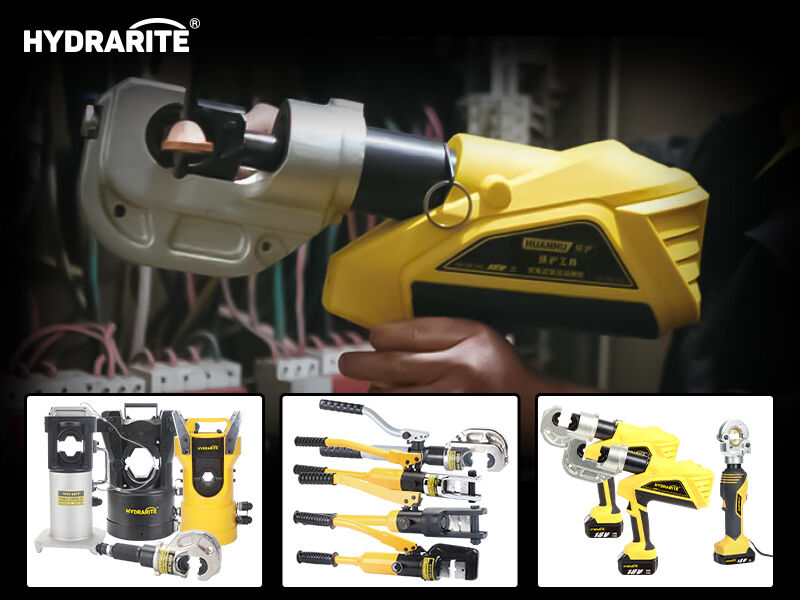
Match Crimping Tools to Wire Gauge and Terminal Type
Why AWG Compatibility Dictates Crimp Force, Die Size, and Tool Class
The American Wire Gauge system plays a major role when choosing the right crimping tools because it relates closely to how big those terminal barrels need to be and what kind of material they can handle. For smaller wires ranging from 22 to 18 AWG, we really need those precision dies that keep crimp heights under half a millimeter so we don't break the conductor. On the other hand, bigger wires like 8 to 10 AWG call for some serious muscle behind them, typically needing at least three tons of pressure just to get proper deformation in those terminals. When there's a mismatch between what our tools can do and what the wire gauge actually needs, problems start happening out in the field. According to recent studies by Ponemon back in 2023, around one third of all connection issues come down to these sorts of mismatches.
- Crimp force: Hand tools max out at 1,500 lb for 16–10 AWG, while hydraulic systems deliver 5,000+ lb for 4–8 AWG
- Die geometry: Insulation-support jaws protect fine-strand conductors in 24–28 AWG wires; open-frame dies accommodate coarse cables
- Tool classification: Automotive-grade crimpers are rated for 20G vibration endurance on 14–16 AWG terminals—unlike standard electronics models
Key Terminal Types and Their Crimping Requirements: Ring, Spade, Butt, Ferrule, and RJ45
Each terminal type requires a distinct crimp profile to achieve gas-tight, pull-out—resistant connections:
| Terminal | Crimp Profile | Tool Class Requirement | Failure Risk if Mismatched |
|---|---|---|---|
| Ring | Concentric circular | Heavy-duty ratcheting (≥5 kN) | 23% vibration loosening (SAE J2031) |
| Spade | F-crimp wings | Controlled indent depth | Insulation cold flow (38% failure rate) |
| Butt splice | Dual dimple pattern | Interchangeable die sets | Splay distortion (IEC 60352-2) |
| Ferrule | Quadrilateral | Micro-precision jaws | Strand fracture (DNV-GL 2019) |
| RJ45 | Simultaneous 8-pin | Guided insertion dies | Signal cross-talk (TIA-568-D) |
Mismatching tools and terminals reduces pull-out resistance by 30% (Nexans 2023). In vibration-critical applications like automotive wiring, ring terminals require 15% higher compression than static installations.
Align Crimp Die Geometry with Terminal Barrel Profile
Oval, Hex, Square, F-Crimp, and Dimple: How Shape Matching Prevents Cold Flow and Barrel Splitting
Precise alignment between crimp die geometry and terminal barrel profile is essential to avoid cold flow—where terminal material deforms under pressure, reducing contact area—and barrel splitting from uneven stress distribution. For example:
- Oval dies compress round barrels uniformly, eliminating voids in automotive connectors
- Hex dies generate six contact points ideal for high-vibration industrial terminals
- F-crimps fold barrel wings inward to secure telecom ferrules
- Dimple dies displace material into stranded conductor gaps, locking strands in place
A 2023 termination study found shape-mismatched crimps fail 73% faster under thermal cycling. Correct pairing maintains compression integrity and ensures gas-tight seals that resist moisture ingress. Always verify die profiles against terminal specifications using manufacturer compatibility charts—this prevents wire pullout and voltage drop in critical power transmission systems.
Choose the Right Crimping Tool Type for Your Application Environment
Handheld Ratcheting vs. Hydraulic vs. Battery-Powered: Torque Consistency, Portability, and Certification Needs
When picking out tools, folks generally look at how consistent the torque is, whether they can carry it around easily, and what kind of compliance requirements exist. The ratcheting hand tools work by using mechanical locks that make sure the crimp gets completed all the way through. These are great for jobs done out in the field where nobody really cares about getting certified. Hydraulic systems pack quite a punch, delivering somewhere around 33 tonnes of force for those big heavy duty terminals, but these babies need to stay put in one place most of the time and usually come with either CE or UL certification stickers attached for safety reasons. Battery powered versions give workers freedom without cords while still helping with the actual crimping process, although nobody wants to deal with constantly checking battery levels or remembering when last they calibrated them. For industries like aerospace or railroads, there's no getting around needing those ISO/UL certified tools. But up on rooftops working on HVAC systems or making regular service calls? Most technicians just grab their trusty portable ratcheting model because in those situations, having something reliable and easy to handle matters more than worrying about paper certifications.
Environment-Specific Demands: Automotive (vibration-resistant), HVAC (high-torque), and Electronics (micro-precision)
The right tools for the job depend heavily on environmental conditions. Shops working on cars need tools with vibration dampening handles and strong dies because engines shake things up quite a bit. About one third of electrical problems in vehicles actually come from crimp connections breaking down due to all that shaking. For HVAC work, technicians must have crimping tools that can handle really tough jobs, pushing over 4,500 pounds per square inch when dealing with those thick copper lines used in refrigeration systems. When it comes to making tiny electronic components, manufacturers rely on super precise instruments. These tools need tolerances no bigger than 0.1 millimeters and often include magnifying lenses so workers can see what they're doing without damaging delicate pins on small connectors. Getting the right balance between tool capabilities and workplace challenges makes a big difference. Properly matched equipment cuts down on having to redo work by around 40 percent and stops those pesky cold solder joints from forming.
Apply a Verified 4-Step Selection Checklist for Reliable Crimps
Implementing a standardized verification process ensures crimped connections meet industry benchmarks for safety and performance. Follow this validated checklist:
- Tool Calibration & Terminal Prep: Calibrate crimping tools monthly using certified height gauges and force meters to maintain ±0.002" tolerance. Strip wires to manufacturer-specified lengths—no conductor nicks or insulation damage.
- Visual Inspection: Examine crimps under 10× magnification for barrel symmetry, wire fill (≥90% occupancy), and absence of cracks, whiskering, or insulation compression.
- Mechanical Validation: Conduct pull-force tests per IPC/WHMA-A-620 standards—e.g., 22 AWG terminals must withstand ≥45 lbf (Ponemon 2023).
- Electrical Verification: Measure resistance with micro-ohmmeters; values exceeding 0.5 mΩ per crimp indicate insufficient compression or oxidation.
Cross-section analysis further validates gas-tightness and strand alignment:
| Test Method | Critical Metric | Pass/Fail Threshold |
|---|---|---|
| Pull Force | Mechanical strength | ≥75% wire tensile strength |
| Electrical Resistance | Current stability | ≥0.5 mΩ per connection |
| Cross-Section | Void area & strand deformation | <5% void ratio |
Leading standards bodies mandate this sequence to prevent latent failures in high-vibration environments like automotive or industrial controls.
FAQ
What is the importance of matching crimp tools to wire gauge?
Matching crimp tools to wire gauge is crucial to ensure proper deformation of the terminal. A mismatch can lead to connection issues and failures.
How do different terminal types affect crimping requirements?
Different terminal types require specific crimp profiles to provide gas-tight, pull-out resistant connections. Using the wrong profile can increase failure risk.
Why is crimp die geometry important?
Crimp die geometry must align with the terminal to avoid cold flow and splitting, ensuring compression integrity and robust seals that resist moisture.
What tool types are best suited for different applications?
Handheld ratcheting tools suit fieldwork, hydraulic systems are stationary with high force outputs, and battery-powered tools offer portability for various settings.
What is involved in a 4-step selection checklist for crimping?
It involves tool calibration, visual inspection, mechanical validation, and electrical verification to ensure crimped connections meet safety and performance benchmarks.