
 EN
EN
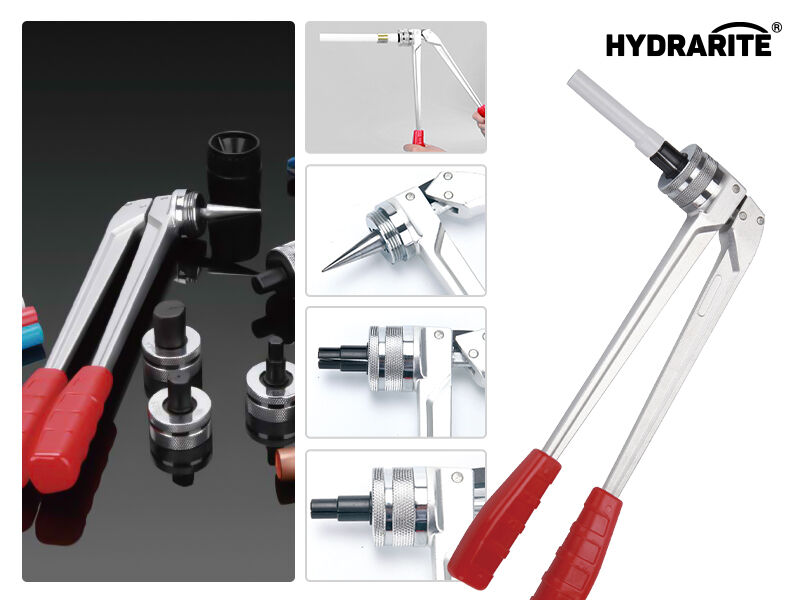
Why Pipe Size Dictates Expander Selection
The size of the pipe plays a big role in choosing the right expander since both diameter and wall thickness affect what kind of force, how much precision is needed, and whether the tools will last long enough to make those watertight connections. Take a 3/8 inch copper pipe as an example. It doesn't need much expansion force at all, but getting it right takes careful work so we don't damage those thin walls. Most plumbers handle these with small hand tools that fit comfortably in their toolbox. Things change quite a bit when working with something like a 1 inch steel pipe though. These require way more torque, sometimes three times what's needed for half inch pipes, just to push through that thicker material without letting the rollers slip around. Getting this wrong matters a lot. If the expander is too small, the flare won't form properly and water will start leaking once pressure builds up. But go too big and there's real danger of cracking the pipe itself or breaking parts off the tool during operation. We've seen plenty of jobs ruined by mismatched equipment choices.
Wall thickness variations further complicate compatibility. Thin-walled ½-inch pipes require gradual, controlled expansion to prevent buckling, whereas schedule 80 pipes demand high-force rollers to maintain circularity. Industry studies show that improper sizing accounts for 68% of joint failures in HVAC installations—underscoring the importance of matching expanders to exact pipe dimensions.
Key consequences of mismatched sizing include:
- Pressure integrity loss: Gaps from uneven expansion can cause leaks at just 40 PSI
- Material fatigue: Over-expansion can thin walls by up to 15%, reducing burst resistance
- Tool degradation: Excessive force accelerates roller wear, leading to diameter drift and inconsistent performance
Selecting pipe-specific expanders ensures optimal mechanical advantage and dimensional accuracy, preventing these issues.
Matching Expanders to Common Pipe Sizes: From 3/8-inch to 1-inch
3/8-inch and 1/2-inch Pipes: Precision Manual Expanders for Tight Spaces
When dealing with smaller diameter jobs such as connecting faucets or running lines to appliances, many plumbers still prefer manual expanders for better control. These tools are just the right size to squeeze into tight spots behind sinks or inside cabinets where bigger electric models simply won't reach. What makes them so valuable is the direct feel they give installers. This hands-on approach lets professionals sense even slight resistance changes while expanding the pipe. Especially important with those thin walled PEX tubes, since pushing too hard can actually warp the material permanently. Take standard sizes for example: 3/8 inch pipes measure around 0.485 inches internally, while half inch ones come in at approximately 0.685 inches. An expansion beyond these by even a tenth of an inch might lead to weak joints down the road.
3/4-inch Pipes: The Sweet Spot for Balanced Torque and Control
This mid-range size—common in branch supply lines with an outer diameter (OD) of ∅0.875 inches—requires expanders that balance human strength with precision. Manual ratcheting models excel here, using gear reduction to amplify leverage while preserving operator feel. The ideal balance occurs because:
- Torque needs remain manageable (under 30 ft-lbs)
- Roller contact ensures even pressure distribution
- Ergonomic handles reduce fatigue during repeated use
Proper calibration supports consistent 10–15% expansion rates, essential for reliable cold expansion joints without stressing the pipe.
1-inch Pipes: When Uniform Expansion and Leak Integrity Demand Higher Performance
Main supply lines at this scale require expanders built for high performance. With an OD of ∅1.125 inches and thicker walls, achieving uniform radial expansion demands:
- Higher force output (50+ ft-lbs)
- Multi-stage roller alignment systems
- Thermally stable components
Electric expanders are essential, maintaining consistent RPM under load—where manual tools risk uneven expansion. Research indicates that improper expansion of 1-inch pipes causes 37% of system leaks, often due to less than 5% diameter variation across joints (Plumbing Standards Journal 2023).
Manual vs Electric Expanders: When Pipe Size Triggers the Power Threshold
Manual Expanders Excel Up to 3/4-inch — Ergonomics, Feedback, and Portability
When working with pipes smaller than 3/4 inch, manual expanders give operators much better control since they can feel exactly what's happening during expansion. These tools are light enough to carry around easily and can fit into really tight spots where bigger equipment won't go. The hands-on nature lets workers adjust as needed while feeling how the pipe responds, which helps prevent damage from over-expanding. According to some recent research from mechanical contractors back in 2023, these hand tools actually cut down setup time by about 40% when compared to electric versions in cramped locations. Plus, because they don't need cords or batteries, manual expanders work great out in the field or on job sites that move around frequently. Looking at maintenance records from last year shows another benefit too – models with fewer moving parts tend to last about 25% longer between repairs, making them pretty cost effective for regular maintenance tasks.
Electric Expanders Become Essential at 1-inch — Consistency, Speed, and Reduced Operator Fatigue
When working with pipes 1 inch or larger in diameter, electric expanders play a vital role in keeping joints secure. These tools apply even pressure across the entire surface, pushing outwards at forces well beyond 10,000 pounds per square inch. This helps create those reliable flares needed for proper sealing in pressure systems throughout factories and plants. According to industry data from the Occupational Safety Journal published last year, electric expanders finish jobs on 1-inch pipes around 70 percent quicker than old fashioned hand tools, plus they cut down on physical strain for workers by roughly half. The way these machines control torque means operators don't have to worry about messing up expansions either too little or too much. Automated versions can keep measurements accurate within just 0.002 inches difference after hundreds of uses something impossible to achieve when doing things by hand. And there's another benefit worth mentioning: workplaces that switched to electric expanders reported about 35% fewer cases of repetitive strain injuries among their staff members.
Tool Design Factors That Scale with Pipe Size: Heads, Calibration, and Durability
Interchangeable vs Dedicated Expander Heads: Trade-offs in Accuracy and Workflow Efficiency
Interchangeable heads offer flexibility across pipe sizes but introduce potential alignment inconsistencies. Dedicated heads provide superior concentricity for specific diameters but require multiple tools. Key considerations:
- Accuracy: Dedicated heads maintain ±0.001" tolerance versus ±0.005" for interchangeable systems (Pipe Fabrication Journal 2023)
- Workflow: Interchangeable heads reduce tool changeovers by 70% but require more frequent calibration
- Cost: Dedicated setups cost 40% more upfront but cut rework expenses by 22% annually
Calibration Stability and Roller Wear — Why Larger Pipes Exacerbate Drift and Repeatability Loss
Expanding 1-inch or larger pipes generates up to 300% more radial stress than ½-inch work, accelerating roller wear and calibration drift. Data shows:
| Pipe Size | Force Required | Calibration Drift/100 Cycles |
|---|---|---|
| ¾-inch | 850 lbf | 0.003" |
| 1-inch | 1,900 lbf | 0.009" |
This increased stress degrades repeatability, necessitating hardened carbide rollers and quarterly recalibration. Thermal expansion differences between pipe alloys further compound measurement errors above ¾-inch. Advanced designs incorporate strain gauges and automatic compensation to maintain accuracy under heavy loads.
FAQ
Why is the size of the pipe so crucial in selecting expanders?
The size affects the force needed, precision required, and durability of tools, influencing tightness and integrity of pipe connections.
What are the differences between manual and electric expanders?
Manual expanders are more suitable for pipes up to 3/4-inch providing better ergonomics and feedback. Electric expanders are necessary for pipes 1-inch and larger, offering consistency and speed.
What issues may arise from mismatched expander and pipe sizes?
Mismatched sizes can lead to pressure integrity loss, material fatigue, and tool degradation due to uneven expansion and force application.
How do interchangeable expander heads compare to dedicated ones?
Interchangeable heads offer flexibility but might affect alignment. Dedicated heads maintain accuracy for specific diameters but are more costly.