Specifying Heavy Duty Hydraulic Cylinders: A Guide to Resilience and Performance
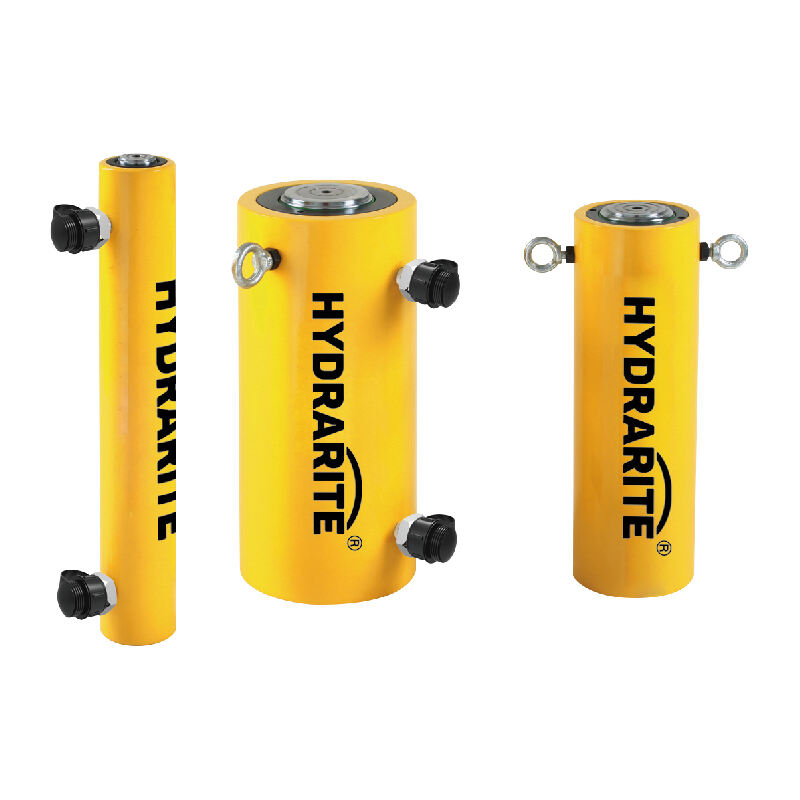
In the realm of industrial machinery—from massive construction equipment and metal-forming presses to critical pipe bending and lifting systems—the hydraulic cylinder acts as the fundamental muscle. Selecting the right Heavy Duty Hydraulic Cylinder is a critical engineering decision that impacts machine uptime, safety, operational cost, and ultimately, project success. For engineers, maintenance managers, and procurement specialists, navigating this selection requires moving beyond basic force ratings to a holistic understanding of design, material science, and real-world application stresses. This guide explores the core principles behind specifying cylinders that truly live up to the "heavy-duty" designation.
The foundation lies in Material Science and Metallurgical Integrity. A cylinder's ability to withstand pressure is dictated by the yield strength of its materials. For heavy-duty applications, cylinders must be constructed from high-grade, seamless steel tubing for the barrel, which is then precision honed. This process achieves an exact internal diameter and a superior surface finish that is crucial for seal longevity. Equally important is the piston rod, which must resist both axial compressive loads and potential side loading. High-strength alloy steel rods, hardened through processes like induction heating and finished with a thick layer of hard chrome plating, provide the necessary toughness, wear resistance, and corrosion protection. The choice of metallurgy and treatments directly correlates to the cylinder's ability to resist fatigue, cracking, and deformation under cyclical high-load conditions, which are the primary causes of catastrophic failure.
The second pillar is Dynamic Sealing and Contamination Control. A cylinder is only as reliable as its ability to contain pressure and exclude contaminants. Heavy-duty environments are hostile, with abrasive particulates, moisture, and chemical exposures. A sophisticated sealing system is not a single component but an integrated defense strategy. It begins with high-performance rod wipers or scrapers to aggressively remove external contaminants. Internally, a combination of primary pressure seals (designed for high extrusion resistance), secondary buffer seals, and bearing bands work in concert. The geometry and compound of these seals are tailored to the operating fluid, temperature range, and specific pressure profile—including potential pressure spikes or "water hammer" effects common in high-cycle machinery. Effective contamination control is paramount, as ingested particles act as abrasives, accelerating seal and barrel wear exponentially, leading to internal leakage and loss of power.
Finally, consider Application-Specific Design and Service Life Optimization. "Heavy-duty" is not a one-size-fits-all term. Cylinders for a mobile crane face different stresses (dynamic loads, environmental exposure) than those in a stationary hydraulic press (continuous high tonnage). Key design considerations include the optimal rod diameter-to-bore ratio to prevent column buckling under load, the type and strength of mounting attachments (e.g., reinforced trunnions for pivoting applications), and the incorporation of features like cushioning to decelerate the piston at the end of the stroke, preventing damaging impact. Furthermore, design for serviceability is a critical aspect of total cost of ownership. Cylinders with serviceable gland assemblies allow for seal replacement without full disassembly, and accessibility of port connections simplifies maintenance. Proactively understanding the mean time between failure (MTBF) and having access to genuine OEM seal kits and components are essential for planning maintenance and minimizing unplanned downtime.
In essence, procuring a Heavy Duty Hydraulic Cylinder is an investment in the resilience of your entire system. It requires a partnership with a manufacturer whose expertise extends from advanced metallurgy and seal technology to a deep understanding of diverse industrial applications. By prioritizing cylinders built with superior materials, engineered sealing systems, and application-focused design, you secure not just a component, but a pillar of reliability that ensures your machinery delivers consistent, powerful, and safe performance day after day.

 EN
EN