
 EN
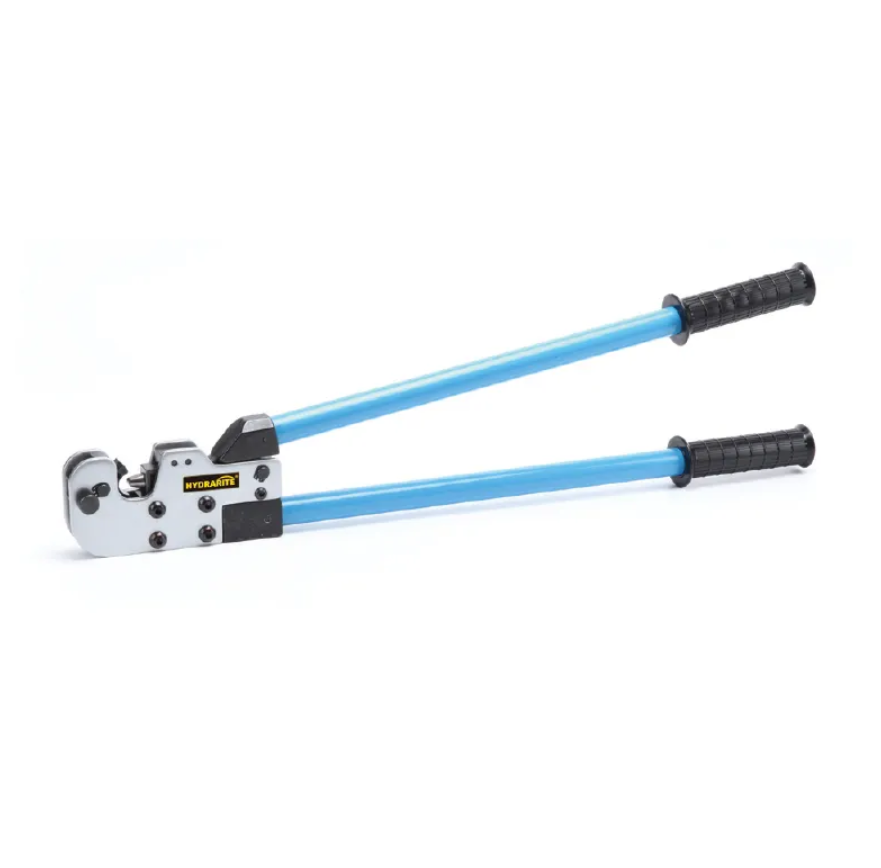
Productivity starts in the seconds you stop wrestling with a hose
Walk onto a job site where cable terminations are still made with a hand pump hydraulic crimper, and you will see a rhythm that eats time in small bites. The operator positions the die, connects the hose, braces the tool, and then pumps the handle fifteen or twenty times to close the jaws, every single cycle. Those seconds seem trivial until you multiply them across three hundred connectors on a single floor of a commercial building. A battery crimping tool erases that pumping motion entirely. The operator inserts the cable and connector, presses a trigger, and the tool’s internal electric motor drives a hydraulic piston to the precise pressure in under five seconds. Then it retracts automatically. On a typical day of heavy termination work, this simple change can recover more than an hour of productive time per electrician. That hour, repeated over a project, translates directly into earlier panel energization and faster progress through the schedule.
The engineering that turns a battery into repeatable crimp force
A quality battery crimping tool is not simply a pump with a battery attached. It is a tightly integrated electromechanical system. A brushless DC motor spins a compact planetary gearbox that drives a hydraulic micro pump. The pump builds pressure until a digital sensor registers the target force, and a microprocessor cuts the motor instantly to avoid over crimping. Many smart tools also log each cycle’s peak pressure, date, and time, giving supervisors a digital trail of every termination. Because the tool controls the pressure curve electronically, the sixth crimp of the day is as consistent as the six hundredth. With a manual pump, an operator’s arm fatigue naturally shortens the stroke and softens the final pressure as the day goes on. The battery tool removes human variability from the force equation, which means fewer rejected connections and near zero rework caused by under crimping.
A contractor’s real world shift from hand pump to battery power
An electrical foreman I worked alongside on a wind farm project once described the day his crew switched to battery crimping as the most immediate productivity jump he had ever seen. They were terminating hundreds of large aluminum conductors in turbine towers, often in cramped nacelle spaces where swinging a pump handle was awkward at best. With the previous hydraulic hand pump, a two person team could complete about forty terminations in a shift, and the pump operator was physically drained by early afternoon. After upgrading to battery tools, a single electrician could finish sixty five terminations in the same shift, moving faster and with far less fatigue. The crew no longer had to rotate the pumping duty to save someone’s back, and the entire tower wiring package finished four days ahead of schedule. That acceleration came not from working harder, but from letting the battery carry the effort.
What job site data and industry reports reveal about cordless tools
The productivity differential between manual hydraulic and battery powered crimping is well documented. The National Electrical Contractors Association has published productivity studies noting that cordless tools can reduce termination time by forty to sixty percent compared to manual methods, depending on conductor size and access conditions. Equipment tracking data from large electrical contractors shows that battery crimpers complete an average of three to four terminations for every one completed by a manual pump tool under similar conditions. Industry publication Electrical Construction and Maintenance has reported that battery tool adoption consistently correlates with lower project labor costs per termination and fewer repetitive strain injuries among field crews. These numbers are not marketing claims; they are drawn from actual job cost reports submitted by contractors who tracked their before and after numbers.
The ripple effect of battery speed on project margins and team morale
The benefit of a battery crimping tool extends far beyond the crimp cycle itself. Faster terminations allow the entire electrical team to close out rough in work earlier, which means other trades can begin their portion of the schedule sooner. On a tight construction timeline, this ripple effect compresses the critical path and reduces the risk of liquidated damages for delays. From a financial perspective, the labor savings per termination multiply quickly when bidding on projects with thousands of connections. There is also a human dimension. Electricians who are not exhausted by manual pumping can sustain their focus longer, work safer, and go home with enough energy to return the next day. Contractors who invest in battery tools often report lower turnover because the job becomes more sustainable. A tool that feels like a professional instrument instead of a physical ordeal elevates the entire work environment.
Why manufacturing quality determines how long that battery advantage lasts
All these productivity gains hinge on a battery tool that performs day after day without failure. The difference between a tool that pays for itself in months and one that becomes a repair burden lies in the manufacturing details. A well built tool uses a rigid forged head that resists spreading under load, high quality seals that keep hydraulic oil where it belongs, and a battery management system that protects cells from overheating or deep discharge. The motor and gear train must be aligned with micron level precision to avoid premature wear. This is where production expertise directly serves the contractor. Hydrarite has built its reputation on the disciplined manufacture of hydraulic and battery crimping tools. Through in house precision machining, rigorous component testing, and integrated assembly processes, Hydrarite delivers tools that sustain their speed and force specifications over thousands of cycles. For electrical contractors and industrial teams, partnering with a manufacturer like Hydrarite means the productivity numbers they calculate on day one will still be valid on day one thousand.
Table of Contents
- Productivity starts in the seconds you stop wrestling with a hose
- The engineering that turns a battery into repeatable crimp force
- A contractor’s real world shift from hand pump to battery power
- What job site data and industry reports reveal about cordless tools
- The ripple effect of battery speed on project margins and team morale
- Why manufacturing quality determines how long that battery advantage lasts