
 EN
Where manual bending exhausts the human body
Walk into any fabrication shop that still relies on manual tube benders, and you will see the same scene. An operator braces a long lever against their shoulder, plants their feet, and throws their entire body weight into each bend. After twenty minutes, the sweat is pouring and the movements slow down. By the end of an eight hour shift, the person is physically spent, and the risk of a strained back or inflamed elbow has climbed sharply. For decades, this was simply accepted as part of pipe and tube work. But the human body was never designed to apply hundreds of pounds of force through a lever, thousands of times a month. Hydraulic bending machines exist precisely to remove this physical toll. They shift the workload from muscles and joints to a fluid power system that does the heavy pulling while the operator stands upright, controls a valve or pedal, and keeps their energy for the skilled parts of the job.
Fluid power: how hydraulics replace muscle with physics
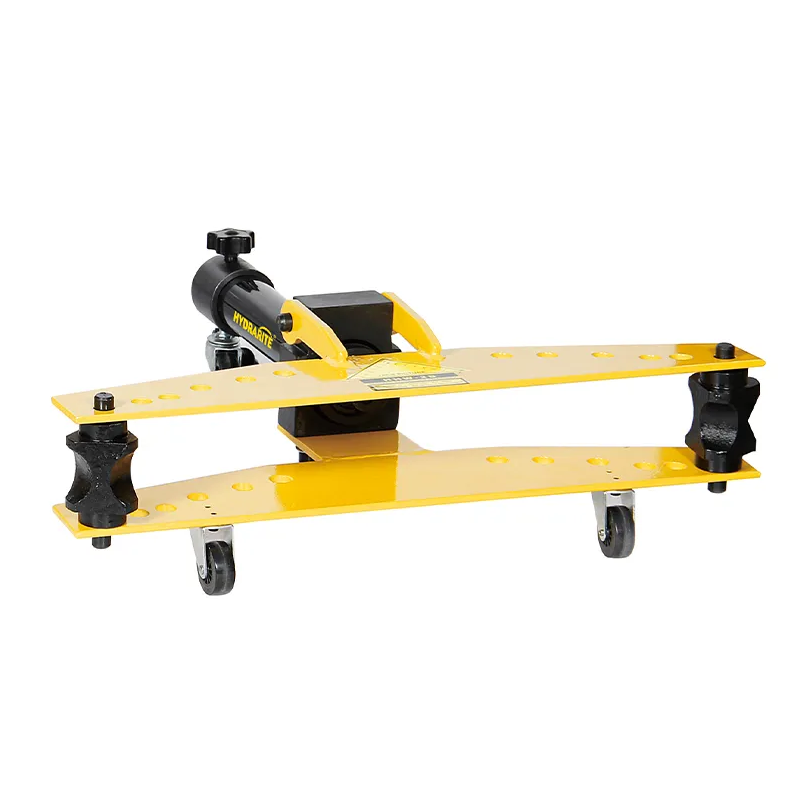
The principle that makes hydraulic bending possible is Pascal’s law. A small force applied to a small piston creates pressure in a confined fluid, and that same pressure acts on a larger piston to generate a much larger force. In a hydraulic tube bender, the operator’s hand or foot moves a control lever or pedal that requires minimal effort. That action directs pressurized oil into a cylinder, which pushes the bending die through the material with tons of smooth, controlled force. A machine rated at sixteen tons can bend thick walled steel pipe that would be impossible to shape manually. The operator’s physical role shifts from power source to precision guide. They position the workpiece, set the bend angle with a stop or digital controller, and activate the cycle. This transformation not only protects the body. It also delivers repeatable bend angles that are hard to achieve when fatigue causes an operator’s pull to vary from one cycle to the next.
A shop floor transformation I witnessed up close
A friend who owns a heating and plumbing contracting business made the switch from manual to hydraulic bending about three years ago. Before the change, he told me, his most experienced pipefitter was seriously considering leaving the trade at age forty two because his shoulders were giving out. They were bending copper and mild steel tubing for commercial boiler rooms, and the sheer volume of large diameter work was breaking their crew physically. After installing a hydraulic bender, the same crew that used to struggle with two inch steel tube could process it in a fraction of the time with one hand on the control lever. The fitter who had been ready to quit stayed on and now trains apprentices. My friend’s worker compensation claims related to strains dropped to zero in the following two years. He told me the machine paid for itself not through faster output, though that happened, but through the physical wellbeing of the people he employs.
What occupational health experts and industry data say
The physical toll of manual bending is not anecdotal. The National Institute for Occupational Safety and Health has documented that forceful exertions, repetitive motions, and awkward postures are primary risk factors for work related musculoskeletal disorders. Manual pipe bending combines all three. In contrast, OSHA’s ergonomics guidelines point to powered equipment that eliminates the need for high hand forces as a primary engineering control for reducing these risks. Industry data from metal fabrication associations shows that shops which replace manual bending with hydraulic systems report significantly fewer shoulder, elbow, and lower back injuries. Some insurance carriers even adjust workers compensation premiums based on the level of automation in a shop, recognizing that hydraulic equipment directly reduces the frequency and severity of strain related claims. These numbers matter because a healthy workforce is not just a moral goal. It is a measurable financial advantage.
The hidden productivity bonus of a low effort shop floor
When physical effort drops, a shop gains more than just safety. Operators who are not exhausted halfway through a shift produce consistent quality from the first bend of the morning to the last bend of the afternoon. A hydraulic machine holds the bend radius steady regardless of who is operating it or how tired they are. This repeatability means less rework and fewer scrapped workpieces. A lower physical barrier also expands the pool of who can do the work. Skilled operators can stay in the role longer as they age, and new workers can become proficient faster because they are learning technique rather than fighting the material with brute force. These gains translate into scheduling predictability, lower training costs, and a more stable workforce. All of this flows from the simple decision to let fluid power carry the load.
Precision engineering that keeps the effort low and the output high
A hydraulic bending machine only delivers on its promise of effortless operation if it is built to last. Seals that degrade under high pressure create internal leaks that cause the cylinder to drift, forcing the operator to make constant adjustments. Valves that stick or respond sluggishly break the smooth rhythm of a bend cycle and reintroduce frustration. A rigid steel frame keeps the bending head aligned so the tube does not twist or kink, which would require extra physical effort to correct. These are the invisible engineering details that separate a machine that stays easy to use from one that becomes a maintenance headache. Hydrarite has focused its manufacturing expertise on exactly these fundamentals. By integrating precision machining, quality component sourcing, and rigorous assembly standards, Hydrarite builds hydraulic benders that maintain their smooth, low effort operation over years of daily use. For workshops and contractors, that reliability means their investment in operator health and shop productivity is protected for the long term.
Table of Contents
- Where manual bending exhausts the human body
- Fluid power: how hydraulics replace muscle with physics
- A shop floor transformation I witnessed up close
- What occupational health experts and industry data say
- The hidden productivity bonus of a low effort shop floor
- Precision engineering that keeps the effort low and the output high