
 EN
EN
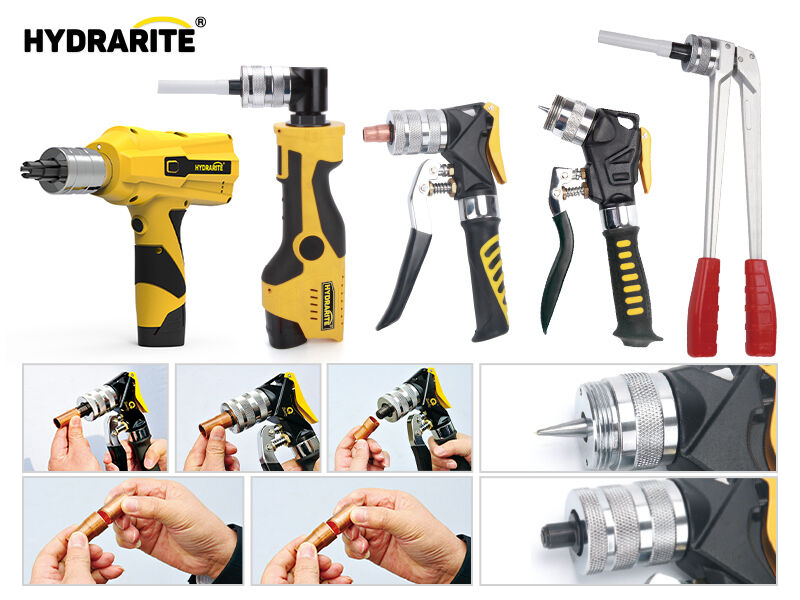
Core Expander Types and Movement Compatibility for Retrofit Applications
Axial, lateral, and angular expanders: Matching movement profiles to pipeline stress modes
Pipelines in industrial settings face three main types of stress: axial stress when pipes get longer or shorter, lateral stress from side-to-side movement, and angular stress where pipes twist at bends or junctions. Axial expansion joints handle stretching and shrinking along the pipeline's main direction, so they work great on straight sections. The lateral ones take care of those sideways shifts, which makes them perfect for connecting branches off the main line. Then there are angular expansion joints that deal with twisting forces, particularly important at those tricky spots where pipes change direction like at T-junctions or bends. Getting the right kind matters a lot during retrofits. When engineers pick the wrong type, it creates stress points in older systems that have already been weakened over time. Research shows this mistake can actually speed up cracks forming in metal by around 40% according to several studies on pipe integrity published in engineering journals.
Pressure-rated selection: Interpreting MAWP, fatigue life, and bellows layer count for aging infrastructure
For retrofitted systems, pressure-rated expander selection hinges on three interdependent criteria:
- MAWP (Maximum Allowable Working Pressure) must exceed operating pressure by at least 25% to account for wall thinning and localized corrosion common in aging pipelines.
- Fatigue life should meet or exceed 8,000 cycles for continuous-process systems—verified through convolution geometry analysis and ASME Section VIII, Division 1 bellows design rules.
- Bellows layer count typically ranges from 2 to 5 plies; multi-layer construction compensates for reduced structural margin in degraded pipe walls. Field data from pre-1990 retrofits shows single-ply bellows fail 1.5× faster than dual- or triple-ply alternatives under equivalent thermal cycling loads.
Expander Selection Criteria Driven by Renovation Constraints
Space, safety, and actuation: Why hybrid pneumatic-hydraulic expanders dominate confined retrofits
For tight retrofit spaces like underground utility tunnels, plant basements, or crowded pipe racks, hybrid pneumatic-hydraulic expanders offer something special when it comes to force relative to their size. The clever design brings together the fast action of pneumatics with the fine control of hydraulics, allowing expansion work to happen smoothly without damaging nearby structures. These systems take up about 40% less room than older single system options on the market today, plus they meet all the safety requirements set out in OSHA 1910.169 for equipment under pressure. What really stands out though are those built in safety features. When there's an unexpected pressure change, the fail safe valves kick in automatically to stop the system from extending too far. This protects the bellows in weakened pipe areas, which makes these units particularly valuable for working with older infrastructure that might not hold up well to rough handling.
Environmental compliance: Selecting explosion-proof, vacuum-rated, or cryogenic expanders for process-critical zones
For critical retrofit work, expanders need proper certification based on the environmental risks they'll face. In areas where there's a risk of flammable vapors, like many petrochemical facilities, explosion proof models that meet both ATEX Directive 2014/34/EU and IECEx standards become absolutely necessary safety equipment. Vacuum rated units are another story altogether. These maintain tight seals even when pressure drops below 10^-3 mbar, which makes them indispensable in pharmaceutical manufacturing and semiconductor production lines where purity matters most. Cryogenic versions made from materials like austenitic stainless steel (ASTM A240 S30408 is commonly used) stay flexible and won't crack unexpectedly at temperatures as low as minus 196 degrees Celsius. This property is vital for liquefied natural gas storage and hydrogen handling systems. Anyone looking to upgrade old hydrogen processing plants or ammonia chillers should know that getting third party certification under PED 2014/68/EU isn't optional anymore. And don't forget material compatibility checks either. Nickel alloys such as Inconel 625 tend to perform better in sulfur recovery units because they stand up to those pesky chloride induced stress cracks that can ruin equipment over time.
Material and Dimensional Integration: Ensuring Long-Term Expander-Pipe Compatibility
CTE Mismatch Mitigation: Avoiding Thermal Fatigue at Carbon Steel–Stainless Steel Interfaces
Differential thermal expansion between carbon steel pipelines and stainless steel expanders creates cyclic interfacial stresses exceeding 35 MPa—well above fatigue thresholds—due to their divergent Coefficients of Thermal Expansion (CTE: ~12 × 10^-6/°C vs. ~17 × 10^-6/°C). Unmitigated, this mismatch drives premature joint failure. Effective mitigation includes:
- Transition joints incorporating functionally graded alloys with intermediate CTE values
- Bellows rated for ≥10,000 cycles under simulated service conditions
- Finite element analysis (FEA) to validate stress distribution across the interface before installationIgnoring CTE compatibility increases the risk of joint failure by a factor of 3.2, with average incident costs reaching $740,000 (Ponemon Institute, 2023).
ASME B31.4/B31.8 Tolerance Stacking: Validating Flange Alignment, Anchor Spacing, and Expander Anchoring Geometry
When installing retrofit expanders, sticking strictly to ASME B31.4 standards for liquid transport and B31.8 for gas transmission matters a lot when it comes to geometry. Problems happen when small errors add up over time and create bending forces that exceed what was designed for. Some key things to watch out for? Flanges need to be pretty much parallel within half a degree, anchors should be spaced no more than 15mm apart, and there's also that pesky expander mounting offset issue. From field experience, using laser alignment equipment combined with proper tolerance stacking calculations has saved countless systems from early failure. Most engineers report around 89% success rate in avoiding those costly bellows ruptures after following these guidelines according to recent industry reports from the ASME B31 Standards Committee back in 2022. Let's look at what specific measurements actually matter here:
| Validation Parameter | B31.4 Tolerance | B31.8 Tolerance |
|---|---|---|
| Flange alignment | ±1 mm/m | ±0.75 mm/m |
| Anchor spacing | ±20 mm | ±15 mm |
| Expander offset | 2% of length | 1.5% of length |
FAQ
What are the main types of pipeline stress?
The main types of pipeline stress include axial stress, lateral stress, and angular stress. Axial stress occurs when pipes lengthen or shorten, lateral stress from side-to-side movements, and angular stress happens where pipes twist, such as at bends or junctions.
Why is pressure-rated selection important for retrofitted systems?
Pressure-rated selection is crucial for retrofitted systems because it considers Maximum Allowable Working Pressure (MAWP), fatigue life, and bellows layer count—ensuring they exceed minimum requirements to handle aging pipeline conditions and prevent failure.
How do hybrid pneumatic-hydraulic expanders benefit confined retrofits?
Hybrid pneumatic-hydraulic expanders are valuable in confined retrofits due to their compact size, combining pneumatic speed and hydraulic control for smooth expansion without damaging nearby structures, and they incorporate safety features to handle unexpected pressure changes.
What are the necessary certifications for expanders in process-critical zones?
Expanders in process-critical zones require certifications such as explosion-proof [ATEX Directive 2014/34/EU and IECEx standards], vacuum-rated seals, and cryogenic material standards for safety and environmental compliance.
How does CTE mismatch affect pipelines?
CTE mismatch between materials like carbon steel and stainless steel causes cyclic interfacial stresses, leading to premature joint failure. Mitigating this involves using transition joints, rated bellows, and finite element analysis for stress validation.
Table of Contents
- Core Expander Types and Movement Compatibility for Retrofit Applications
- Expander Selection Criteria Driven by Renovation Constraints
- Material and Dimensional Integration: Ensuring Long-Term Expander-Pipe Compatibility
-
FAQ
- What are the main types of pipeline stress?
- Why is pressure-rated selection important for retrofitted systems?
- How do hybrid pneumatic-hydraulic expanders benefit confined retrofits?
- What are the necessary certifications for expanders in process-critical zones?
- How does CTE mismatch affect pipelines?