
 EN
EN
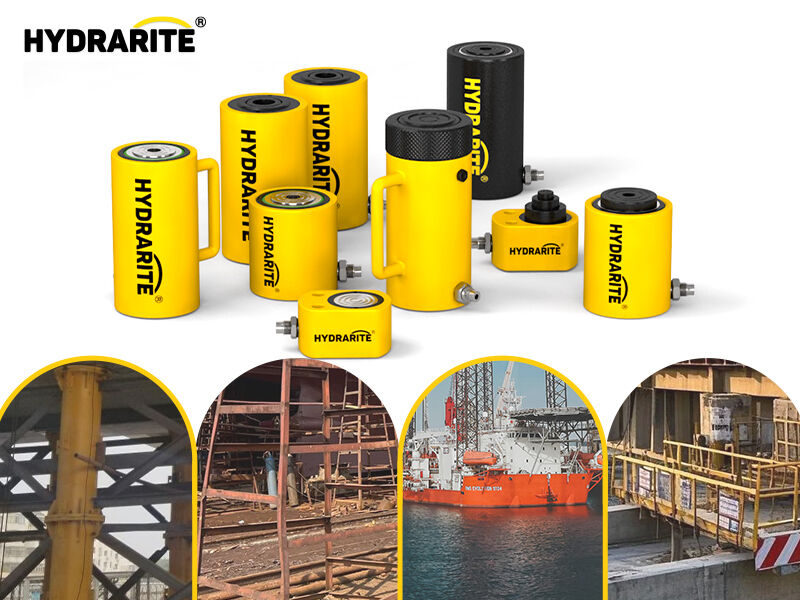
Core Performance Benefits of Hydraulic Cylinders in Industrial and Mobile Machinery
Hydraulic cylinders really boost performance in both industrial settings and mobile equipment when they turn fluid power into straight line force. What makes them stand out is their power packed into small spaces. These cylinders can generate well over 10,000 psi, which means machines such as excavators and industrial presses can handle massive loads without breaking a sweat. And it's not just brute strength either. They also offer incredibly fine control of movement down to the micrometer level. This matters a lot in manufacturing where parts need to fit together with tolerances as tight as 0.001 inches. Think about automotive assembly lines or precision machining operations where even the slightest misalignment can cause problems downstream.
Modern hydraulic systems achieve over 90% energy transfer efficiency by minimizing internal leakage, reducing operational costs by up to 30% compared to electromechanical alternatives (DOE 2023). Their robust design ensures reliable performance in extreme environments:
- Temperature resilience: Operate effectively from -40°F to 300°F
- Contaminant resistance: Seals withstand particulate exposure in mining and construction
- Vibration tolerance: Maintain structural integrity in high-shock applications like forestry machinery
This blend of power, precision, and durability makes hydraulic cylinders critical for demanding applications—from steel mill rollers requiring consistent pressure control to agricultural harvesters needing adaptive force modulation across variable terrain.
Key Design Factors That Directly Influence Hydraulic Cylinder Performance
Bore size, rod diameter, and stroke length: Balancing force, speed, and stability
When looking at how hydraulic cylinders perform, there are basically three main factors to consider. Bigger bores definitely produce more force since force equals pressure multiplied by piston area, but they need a lot more fluid which can actually slow things down when the system has limited flow capacity. Rods that are too thick do help prevent bending issues, though they come at the expense of extra weight and higher costs for materials and manufacturing. And then there's stroke length something that often gets overlooked. Longer strokes create stability problems, so engineers typically either beef up the rod diameter or install some kind of support framework around the cylinder to keep everything aligned properly during operation.
Precision machining prevents misalignment, which accelerates seal wear and reduces service life. Optimal design balances:
- Force requirements against system pressure limits
- Cycle time goals with available pump capacity
- Load-induced bending with anti-buckling measures
Operating pressure and seal efficiency: Maximizing power density and minimizing leakage
Higher operating pressures—commonly 3,000–5,000 PSI in modern systems—enable greater force from smaller cylinders but place increased stress on materials and seals. Advanced sealing solutions, such as asymmetric U-cups and PTFE-energized seals, maintain integrity under these conditions while achieving less than 1% leakage.
Critical factors include:
- Compatibility between seal materials and hydraulic fluids
- Cylinder tube surface finish (typically 0.2–0.4μm Ra)
- Thermal stability across operating temperatures (-40°F to 250°F)
Effective sealing not only minimizes energy loss—reducing friction-related inefficiencies of 5–8%—but also prevents contamination ingress, a leading cause of premature failure in fluid power systems.
Innovations Driving Next-Generation Hydraulic Cylinder Performance
Multi-chamber configurations for adaptive force control and energy recovery
Hydraulic cylinders with multiple chambers let operators adjust forces as conditions change in real time. The design gives better control when handling complicated lifts and actually captures energy as loads come down. This energy recovery feature cuts what pumps have to work through by around 25% during repetitive cycles, which means less power gets used overall. Managing pressure adaptively helps cut down on sudden impacts too, so parts last longer in factory settings where equipment takes a beating day after day.
Digital hydraulic actuators enabling on-demand operation and fuel savings
Digital hydraulics are changing the game by swapping out old school throttling controls for valves that work electronically along with better pressure management systems. What this means is no more mechanical flow restrictions standing in the way of getting just the right amount of power when needed. Some field testing indicates that machines can cut fuel use anywhere from 15 to 30 percent simply because the system matches what's actually required for each job. Manufacturers love this tech since it allows them to program specific movement patterns for those really precise operations. Plus, there's no need to deal with all those complicated mechanical connections anymore which saves both time and money during installation and maintenance.
Smart cylinders with embedded sensors for real-time monitoring and predictive maintenance
Modern smart hydraulic cylinders come equipped with built-in sensors that keep tabs on pressure levels, temperature changes, and cylinder positioning. The information gathered from these sensors helps predict when maintenance might be needed before problems actually occur, catching issues like worn seals or fluid contamination early on. According to industry research, facilities implementing such smart systems report around 40% fewer unexpected shutdowns and get about 300 extra hours between required maintenance checks. Being able to track performance in real time means operators can fine tune their equipment as conditions change throughout the day, which makes a big difference in plant efficiency over time.
Material and Manufacturing Advances Enhancing Efficiency and Durability
High-strength alloys and composite coatings reducing weight and wear
Advanced materials such as chromium-molybdenum steel, combined with nanocomposite coatings, reduce component weight while preserving strength. These innovations lower inertia by up to 30% compared to conventional steels, enabling faster response times and reduced energy use. The coatings also provide wear-resistant surfaces, extending service life by 40% under high-load cyclic testing.
Surface treatments and precision finishing improving seal life and friction performance
Laser hardening and micro-polishing achieve surface finishes below 0.2 microns Ra—five times smoother than standard machining. This level of precision reduces seal abrasion and enhances hydrodynamic film retention between moving parts. Cylinders with these treatments demonstrate:
- 18% lower dynamic friction
- 55% fewer seal failures due to contamination
- Stable pressure performance beyond 5,000 operating hours
Together, advanced metallurgy and sub-micron manufacturing tolerances produce hydraulic cylinders that sustain peak efficiency and reliability over extended service life, even in the harshest industrial environments.
FAQ Section
What are the key advantages of using hydraulic cylinders in machinery?
Hydraulic cylinders offer significant advantages such as high power density, precise control, and reliable performance under extreme conditions, making them ideal for industrial and mobile machinery.
How do hydraulic cylinders achieve high efficiency?
Modern hydraulic systems achieve over 90% energy transfer efficiency by minimizing internal leakage and optimizing design factors such as operating pressure and seal efficiency.
What are smart hydraulic cylinders?
Smart hydraulic cylinders are equipped with embedded sensors for real-time monitoring, enabling predictive maintenance and optimizing equipment usage.
Table of Contents
- Core Performance Benefits of Hydraulic Cylinders in Industrial and Mobile Machinery
- Key Design Factors That Directly Influence Hydraulic Cylinder Performance
- Innovations Driving Next-Generation Hydraulic Cylinder Performance
- Material and Manufacturing Advances Enhancing Efficiency and Durability
- FAQ Section